Overview
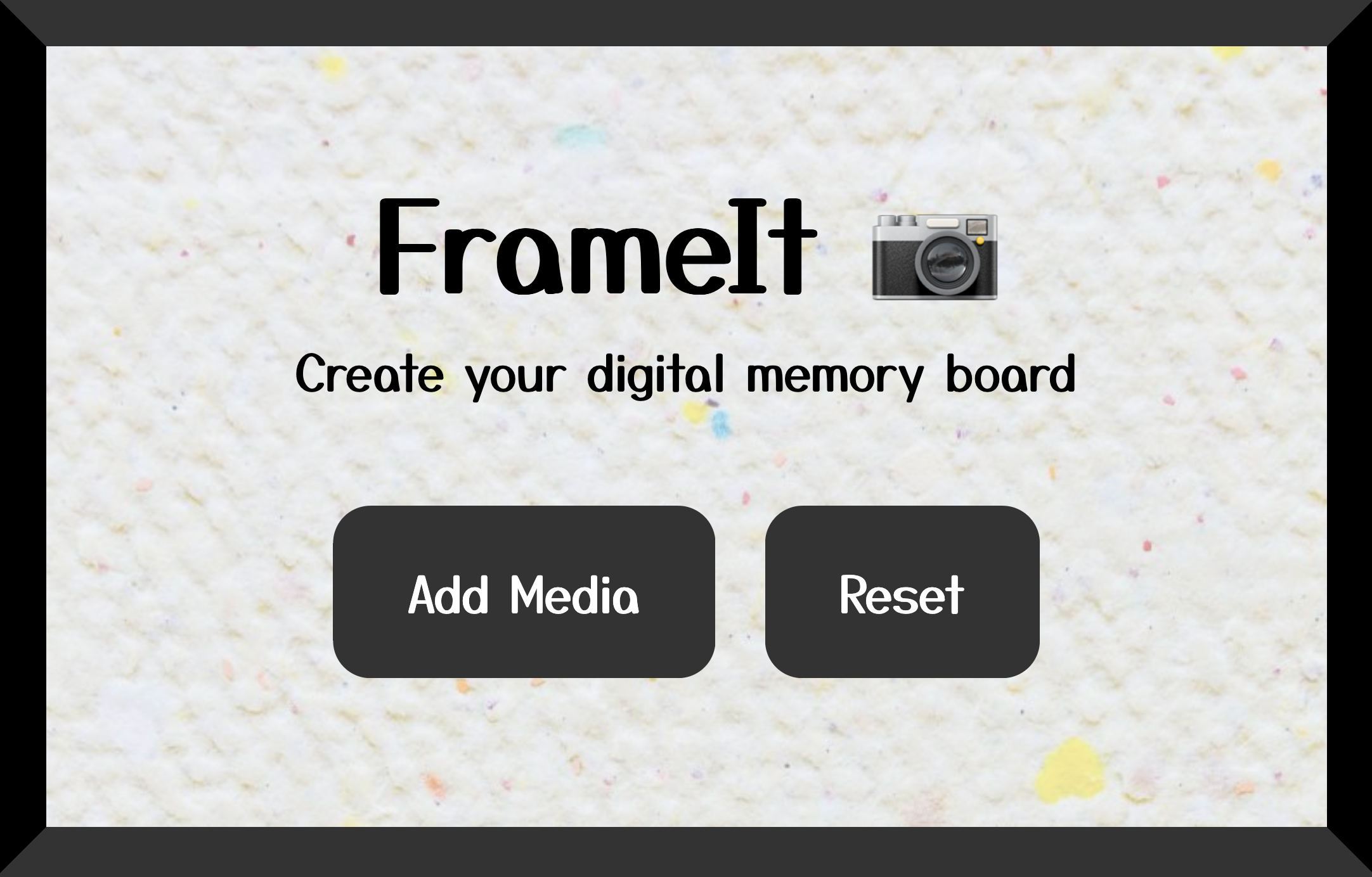
For this project, I created FrameIt, a dynamic digital memory board that enables users to create personalized memory boards with photos, polaroids, sticky notes, and stickers. This project showcased object-oriented JavaScript implementation, modular development, and bundling with Parcel.js.
Using a class-based architecture, I developed an intuitive drag-and-drop interface powered by GSAP animations to make the application engaging and interactive. FrameIt demonstrates practical application of OOP principles while offering users a creative and responsive platform for digital memory creation.
Summary
Year: 2025
Role: Front-End Developer
Deliverables: Single-page OOP JavaScript application with responsive UI, modular architecture, and interactive animations
Development Tools: HTML5, CSS3 (Sass), JavaScript (ES6+ OOP), Parcel.js, GSAP
Problems
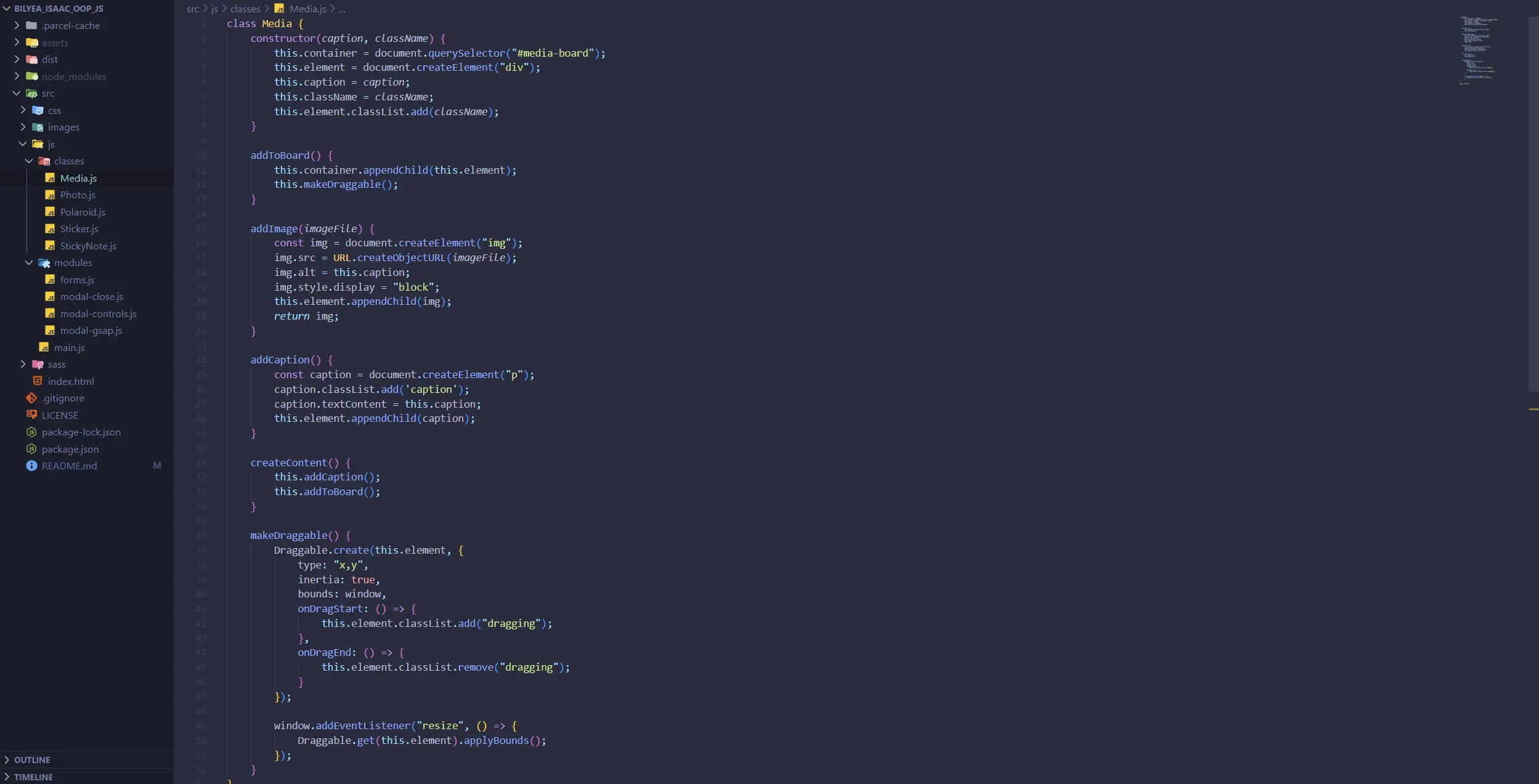
1. Class Structure: Creating a Media class that was both flexible and extensible was challenging, as it needed to support multiple media types while keeping the code maintainable.
2. Z-Index Management: Ensuring draggable elements stacked correctly without interfering with user interactions was tricky, especially when handling overlapping media.
3. Modal Complexity: Building a reusable modal system that could handle different media types while maintaining smooth animations and transitions required careful design.
4. Responsive Interactivity: Making sure the interface remained fully interactive and visually consistent across all devices presented challenges in layout adjustments and user experience.
Research
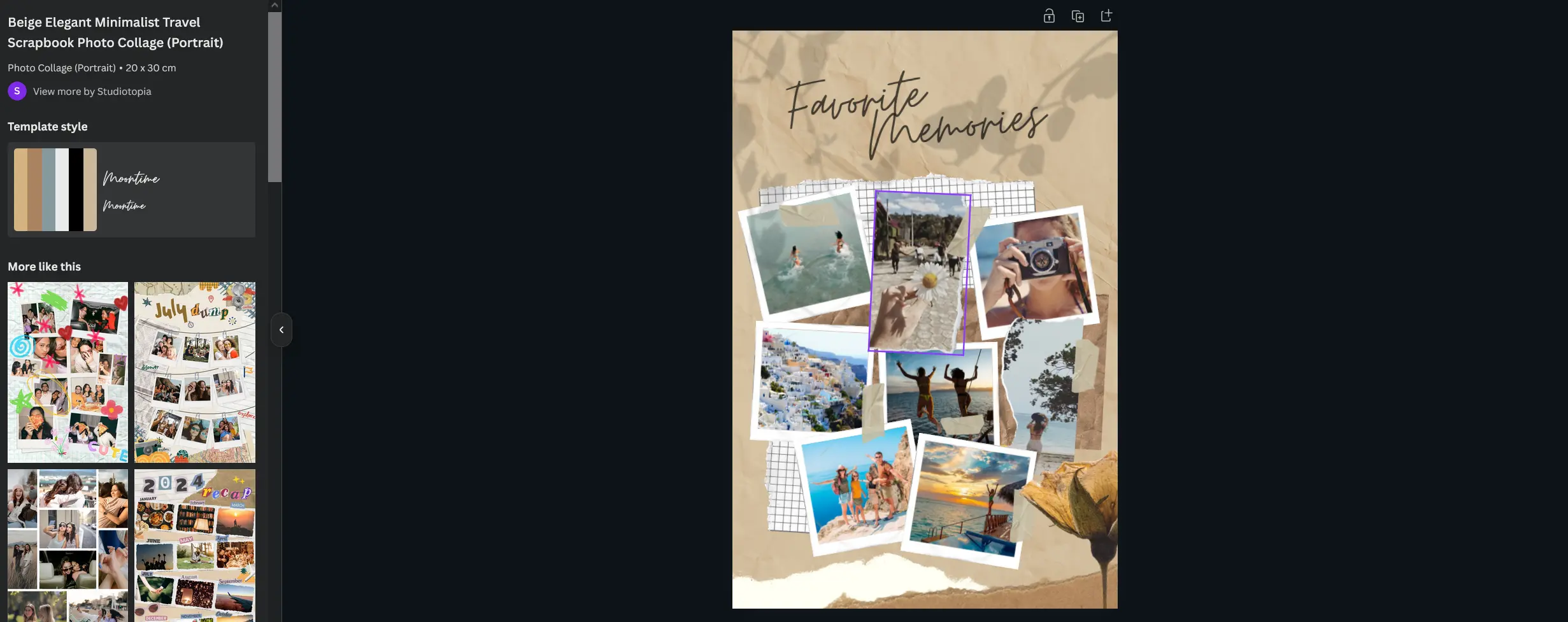
I studied Canva’s interface to understand how it handles element placement, media organization, and user interactions.
This helped me refine the drag-and-drop functionality and overall user experience for a smoother, more intuitive design.
Process
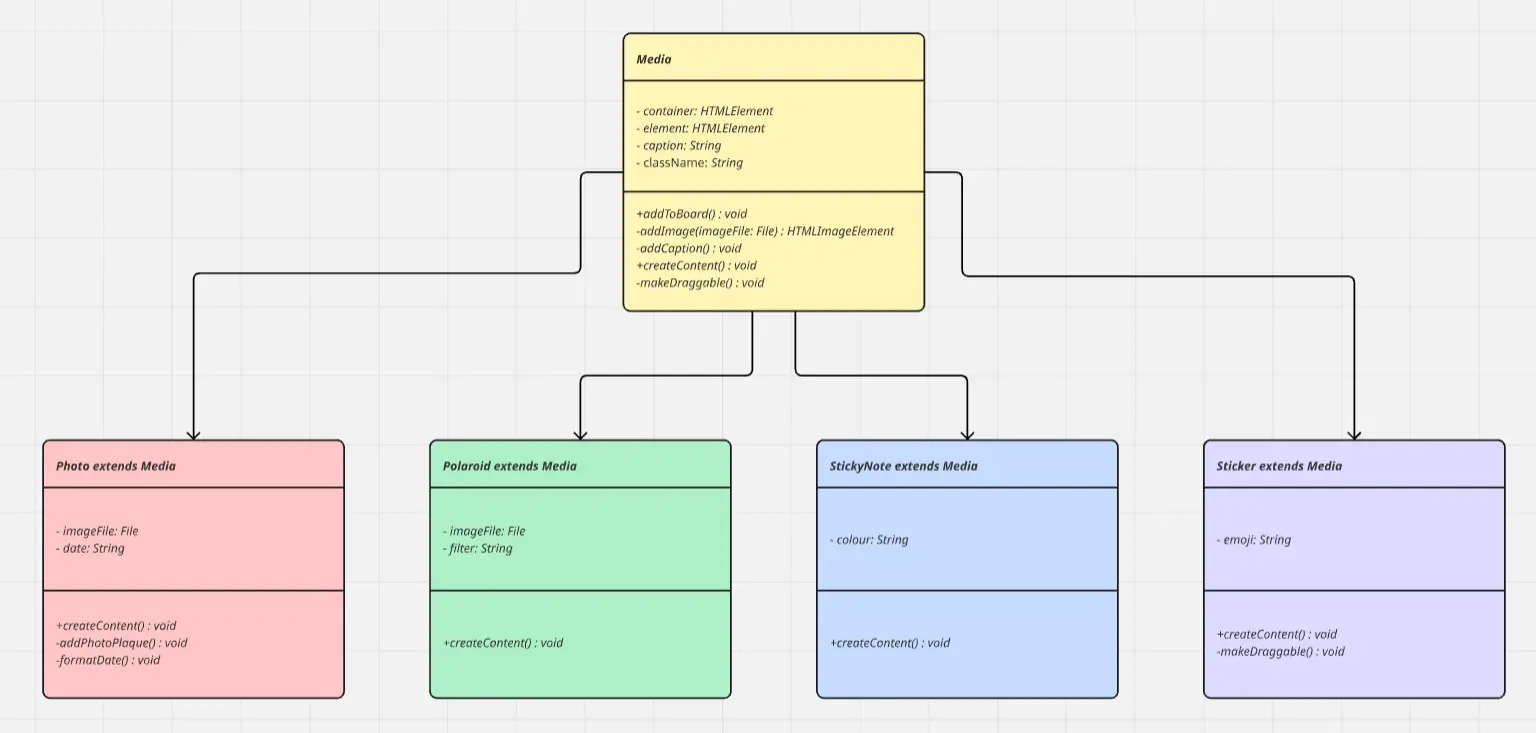
1. OOP Architecture: I designed a base Media class with shared functionality and developed specialized child classes for different media types, including framed photos, polaroids with filters, sticky notes, and draggable stickers.
2. Interactive Features: I used GSAP Draggable for smooth movement, built a modular modal system for adding new media, and designed custom animations for dynamic media placement.
3. Modular Development: I structured the JavaScript into reusable modules for media creation, modal controls, and animation utilities. I used Parcel.js for efficient module bundling.
4. Responsive Design: I took a mobile-first approach using Sass and optimized drag interactions for both touch and desktop users.
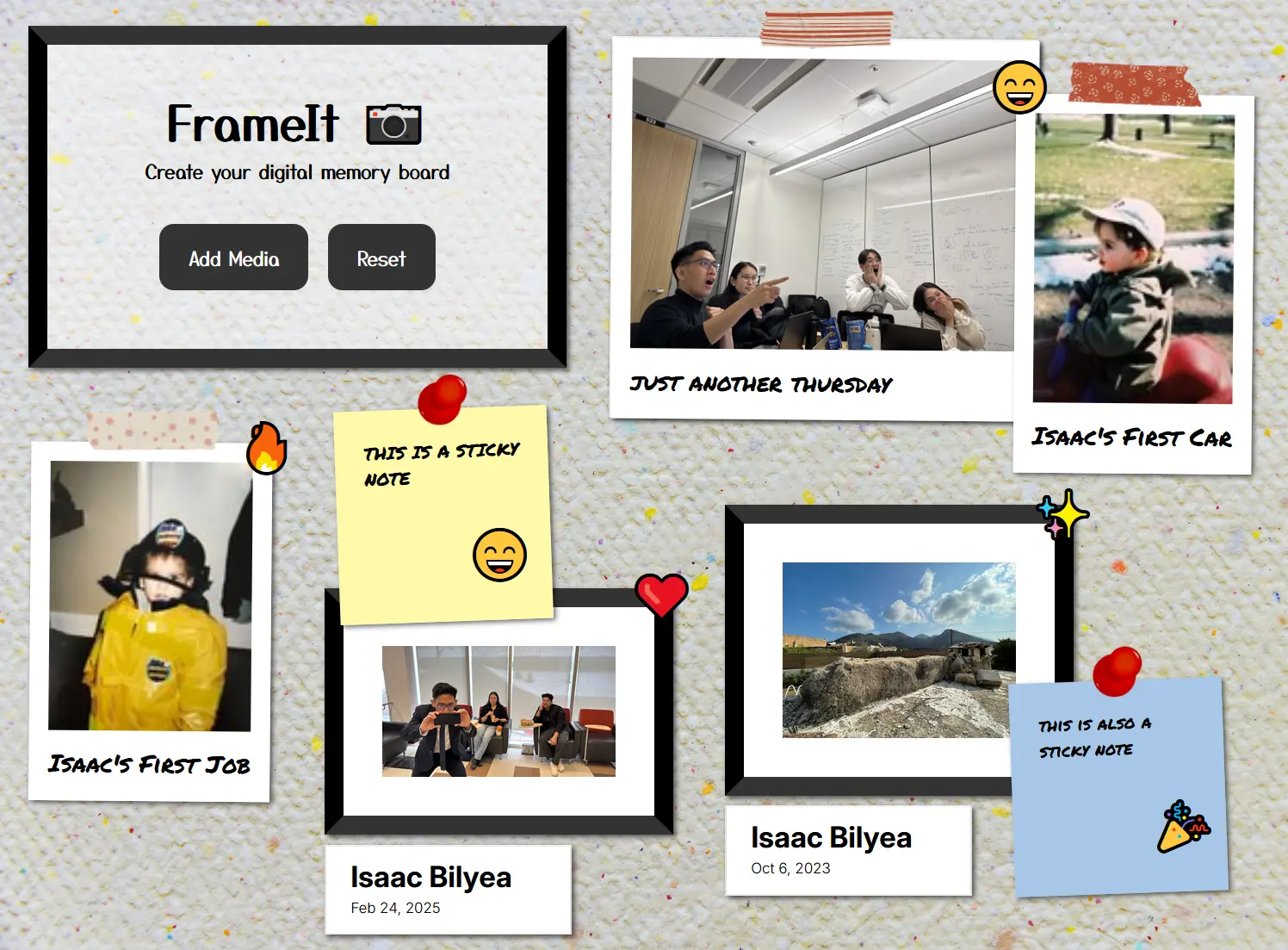
Final Product
View on GithubFrameIt delivers an engaging and interactive experience with:
-
Drag-and-Drop Interface: Users can freely move and position media elements for a personalized layout.
-
Photo Frames & Polaroid-Style Photos: Users can add framed images or apply filters for a vintage look.
-
Customizable Notes & Stickers: Interactive sticky notes and draggable emoji stickers enhance creativity.
-
Smooth Animations: GSAP-powered transitions make interactions feel seamless and dynamic.
-
Fully Responsive Design: The interface adapts smoothly across mobile and desktop devices.
-
Optimized Performance: Parcel.js ensures efficient module bundling for faster load times.
Reflection
This project deepened my understanding of:
-
JavaScript OOP principles and class inheritance.
-
Module bundling with Parcel.js for maintainable code.
-
GSAP animations to enhance user experience.
-
Optimizing cross-device interactions.
Key Takeaways:
-
The importance of a well-structured class inheritance system.
-
Efficient use of modular JavaScript for clean and reusable code.
-
Optimizing animation performance.
-
Balancing design and functionality for an intuitive user experience.
FrameIt successfully combines OOP, modular JavaScript, and interactive animations into a polished web application. This project challenged me, and I’m proud of how it turned out - an engaging and functional app that I’m excited to share.